What a Proper Chimney Cleaning Includes
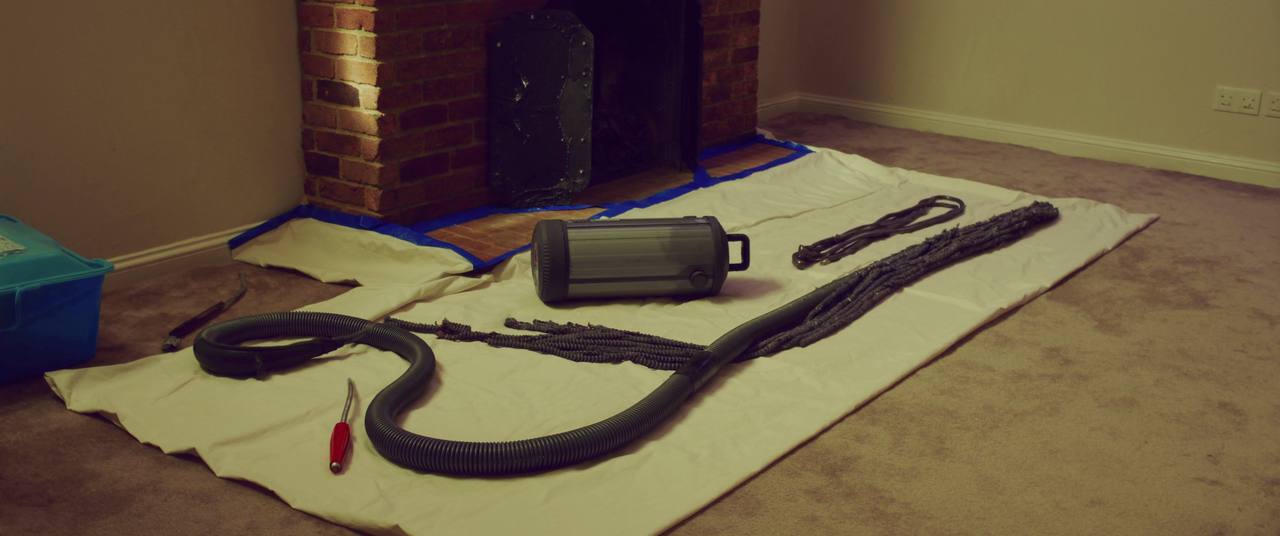
A chimney sweep visit is a system service, not just a brush down a hole. The flue gets swept from firebox to crown, the smoke shelf and smoke chamber get cleaned, the damper gets checked and freed if it's seized, and the whole visible system gets a Level 1 inspection while the tools are out. Dust control is non-negotiable: drop cloths at the hearth and a HEPA vacuum running the whole time, so the soot ends up in the vacuum — not on your carpet.
- Rotary sweeping. Flexible rods with a rotary head scrub the flue walls clean of creosote — more effective on hardened deposits than old-style hand brushing alone.
- Smoke chamber and shelf. The shelf behind your damper catches debris and creosote fall; it's a common ignition point and it gets cleaned every visit.
- Wood stoves and inserts. Stovepipe, connector, and flue — stoves burn slower and cooler than open fireplaces, which means they often build creosote faster.
- The honest check. If your flue is clean and sound, that's the report. Nobody earns anything by selling you a sweep you don't need.
The three stages of creosote
Stage 1 is loose, flaky soot — a brush handles it. Stage 2 is hardened, shiny flakes that need a rotary head. Stage 3 is a tar-like glaze, essentially concentrated fuel coating the inside of your chimney, and the leading cause of chimney fires. The longer a flue goes unswept, the further up that ladder it climbs — and stage 3 removal costs real money, which is the practical argument for a yearly sweep at stage 1 prices.
Wood heat is not a hobby here
Plenty of Genesee County households — especially outside the city, toward Otisville, Montrose, and the county's rural edges — burn wood as primary or backup heat through a heating season that runs roughly October to April. A flue that vents a daily fire for six months works harder than one that hosts a few holiday evenings, and its sweeping schedule should match. Tell us how you burn and you'll get a schedule that fits the reality, not a one-size answer.